
Silk vs. Satin Pillowcase: What's Actually the Difference?
When it comes to choosing a pillowcase, most people hesitate between silk and satin. They look similar, they feel similar, and they're often sold using the same promises. But they are not the same thing. And the difference shows up every single morning.
Here's what's actually going on.
Our silk pillowcases
SILK IS A NATURAL FIBER OBTAINED FROM THE COCOONS OF SILKWORMS. THIS IS HOW ITS NATURALLY SOFT AND SHINY FABRIC IS MADE.
There are different types of silk, such as organza or silk satin.
Satin is not a material or a fabric. It's a weave a way of interlacing threads that can be applied to silk, cotton, or polyester. On the market, "satin" almost always means polyester satin: cheaper to produce, easier to find, and a lot less beneficial than it looks.
We'll explain exactly what that means for your pillowcase.
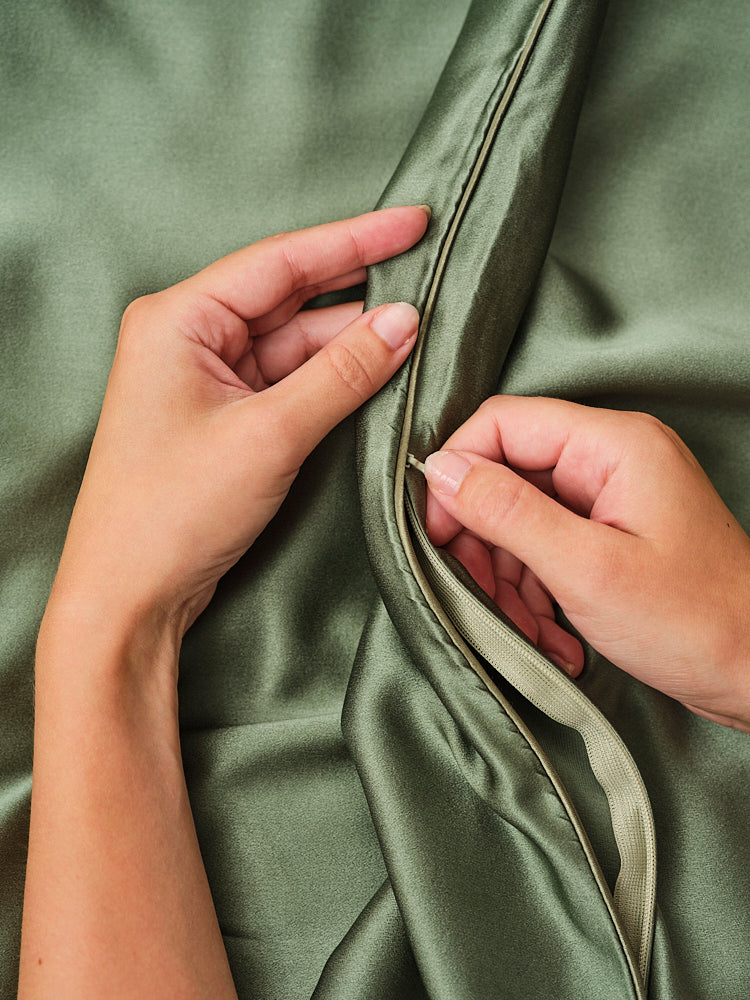
Satin or silk: what are the differences?
Silk and satin show up everywhere in fashion and beauty. They share a similar shine. But how they perform on your skin and hair at night is a completely different story.
The key distinction: silk is a material, satin is a finish. That means a satin pillowcase could be made of polyester a synthetic fiber derived from petroleum, prone to static, non-breathable, and with no real benefit for your skin or hair beyond a smooth surface.
If you're buying a satin pillowcase, always check the fiber content first. "Satin weave" tells you nothing about what's actually touching your face.
And no, a cheaper satin pillowcase will not give you the same results as silk. Here's why.
Silk pillowcases are naturally thermoregulating: cool in summer, warm in winter. Polyester satin traps heat. If you tend to sweat at night, a polyester pillowcase will stay damp — which is exactly as unpleasant as it sounds.
Yes, silk is an investment. One that pays off night after night.
The benefits of a silk pillowcase for your body
Skin and hair care doesn't stop when you go to bed. In many ways, that's when it actually starts.
At night, your skin secretes sebum, regenerates, and repairs itself. Silk, with its 18 amino acids structurally close to human skin, works with that process rather than against it. It's soft, resistant, and genuinely supportive of what your body is already doing while you sleep.
A silk pillowcase won't just feel good. It will show.
Silk is a natural anti-aging and hypoallergenic material. It reduces friction against the skin, which means fewer sleep creases, less irritation, and better absorption of your nighttime skincare. Your serums and moisturizers stay on your face where they belong — not transferred onto your pillowcase.
Result: softer, calmer, more hydrated skin from the very first week.
The silk pillowcase: an ally for your hair
Unlike cotton, silk lets your hair glide rather than catch. No tugging, no friction, no static.
That translates to less breakage overnight, fewer knots to deal with in the morning, and hair that holds its shape — whether it's curly, straight, afro, or fine. Silk doesn't absorb your hair's natural moisture or the treatments you apply before bed. It lets them work.
The result is hair that wakes up closer to how you left it: smoother, shinier, and less fragile over time.
Silk pillowcase, unlike cotton, helps hair hydration — no matter your hair type.
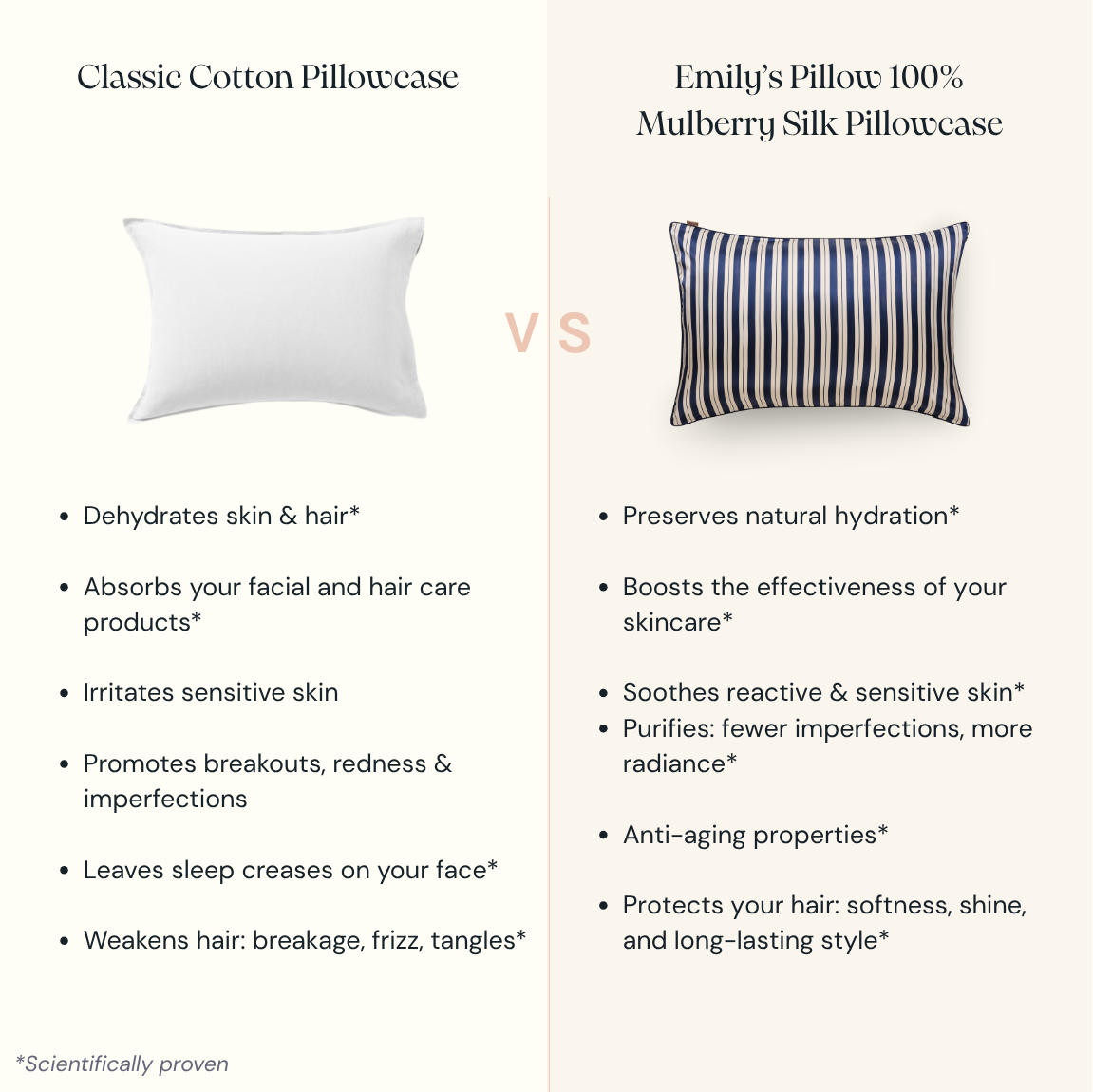
Cotton Looks Fine. Silk Does Better
Cotton is the default. It's everywhere, it's cheap, and nobody questions it. The problem is that cotton works against you at night: it absorbs moisture from your skin and hair, traps heat, creates friction, and soaks up the skincare products you just applied before bed.
Silk does the opposite. It preserves your skin's natural hydration, lets your hair glide without catching, regulates your body temperature through the night, and leaves your serums where you put them. No friction, no absorption, no static.
The difference isn't subtle. It shows up in your skin, your hair, and how you feel when you wake up.
Silk is natural, breathable, and genuinely good for your body. Satin is a weave that can hide almost anything underneath. The choice seems obvious but only if you know what you're actually choosing.
Our choice is already made. You probably figured that out.


